About us
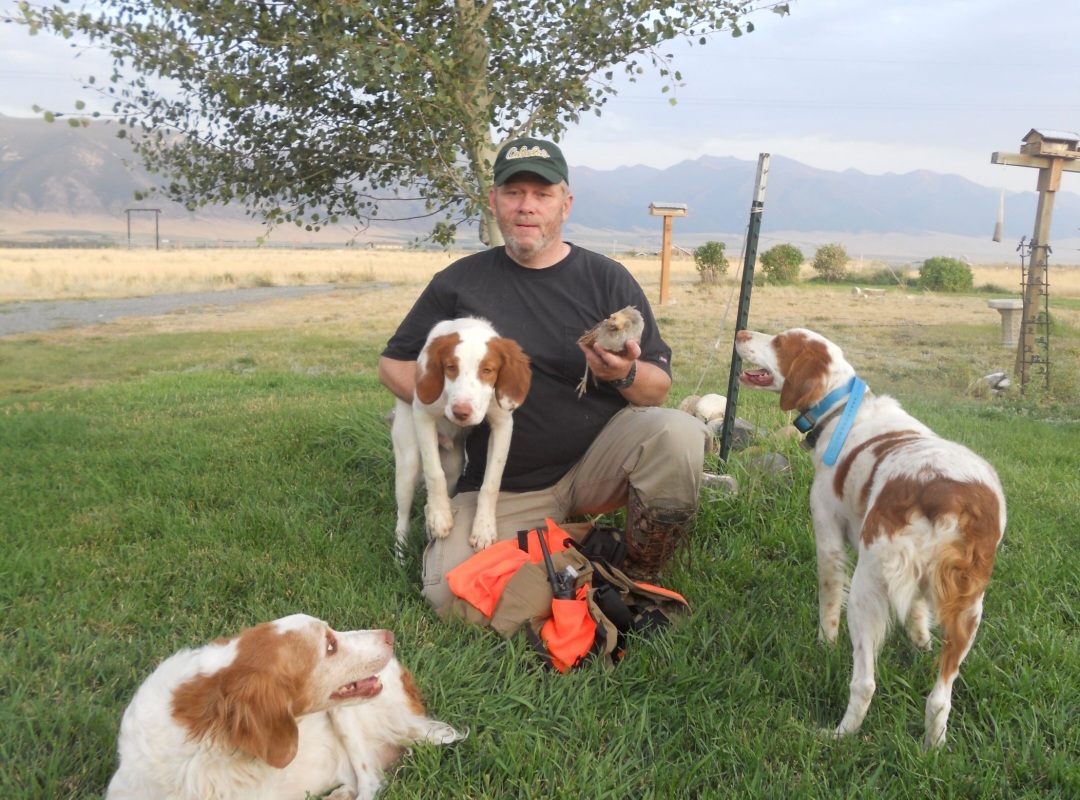
We are Ron and Pam, and our home is in Whitehall, Montana. We have had Brittanys for more than a decade. The first two, Maggie and the first Tooney, never saw a field trial; they were simply tremendous hunters and the best company we have ever kept, and they taught us what the breed is: happy, affectionate, and absolutely consumed by birds.
That is what we set out to preserve. Over the years we have built bloodlines that excel in upland bird hunting, field trials and hunt tests while remaining the most devoted of family companions. We are active members of the Montana Brittany Club, we campaign our own dogs in trials and hunt tests, and we still count the days to opening morning.
We love these dogs and their personalities, and we want nothing more than to share the joy and the adventure they bring with people who will give them the life they deserve.
The Brittany, briefly
The Brittany is the smallest of the pointing breeds and, pound for pound, one of the hardest-working. It was developed in the French province of Brittany as a poacher’s all-rounder and arrived in the United States in the 1930s, where field trialers quickly found that the compact, leggy little dog could run with anything.
Ours are American Brittanys, registered with the AKC. They are bred and trialed for more range and independence than their French cousins, which suits the big country they hunt here.
- Height
- 17½ to 20½ inches at the shoulder
- Weight
- About 30 to 40 pounds
- Coat and color
- Orange and white or liver and white, in clear or roan patterns; dense, flat or wavy, not much feathering
- Group
- AKC Sporting Group; a pointing breed
- Name
- “Brittany Spaniel” until 1982, when the AKC dropped “Spaniel” because the breed points rather than flushes
- Claim to fame
- More AKC Dual Champions, titled in both the show ring and the field, than any other sporting breed
Field-trial words, plainly
The dog pages on this site use the language of AKC pointing-breed field trials. Here is what it means.
- An AKC field-trial stake for dogs from six months to fifteen months old, judged on desire, style, and the instinct to find and point birds. “Puppy pointed” means a dog placed and earned points here.
- For dogs from six months to two years. A derby is expected to hunt with more purpose than a puppy and begin to show manners around birds. Derby placements are the first real test of a prospect.
- A broke dog is steady to wing and shot: it holds its point through the flush and the gun without moving. Dogs must be broke to compete in adult stakes.
- The two kinds of adult stake, divided by range. A gun dog (or shooting dog) hunts for the handler at a distance you could shoot over; an all-age dog ranges far and independently and must find and hold birds on its own until the handler arrives.
- The American Brittany Club’s year-end event for the top derbies in the country, held in Arkansas. Dogs qualify on points earned in trials across the season.
- The season-long award standings that rank Brittanys on placements in licensed trials. Second in the derby standings, as Tooney was in 2018, means second in the nation.
- The Orthopedic Foundation for Animals. Hips are X-rayed after two years of age and graded Excellent, Good or Fair (all passing) or dysplastic; elbows are graded Normal or by grade of dysplasia.
- A hip evaluation that measures joint laxity as a distraction index from 0 to 1. Lower is tighter; we publish the actual index for each female rather than a summary word.
Come meet the dogs
Whitehall is on I-90 between Butte and Bozeman. Call ahead and we will have the dogs in.